
Babydolls and chemises can look similar on a mood board, but they do not play the same role in a lingerie collection. Understanding the difference before sampling can help you avoid overlapping products, unclear fit expectations, and inconsistent product naming.
A babydoll normally combines a defined bust with a short, loose or flared lower body, while a chemise follows a straighter, body-skimming slip silhouette. Neither style is universally better: choose a babydoll for a stronger visual statement and a chemise for a cleaner lingerie or sleepwear crossover.
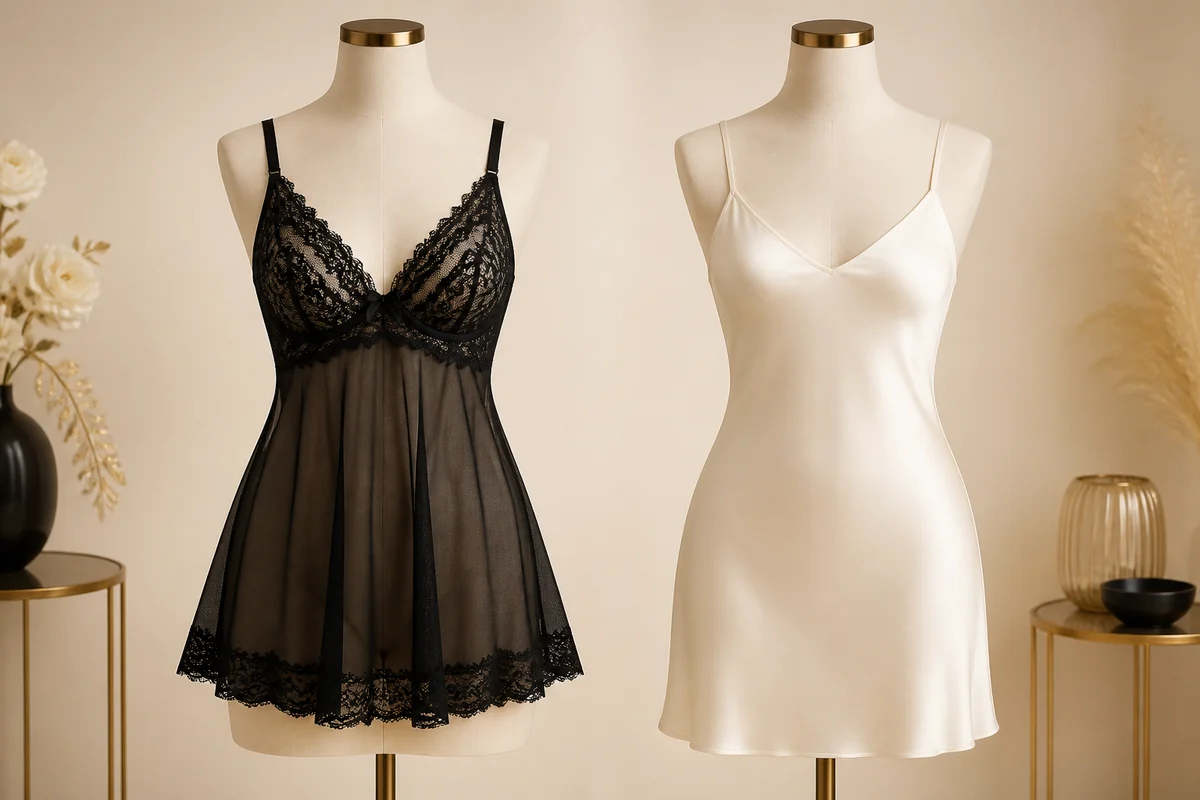
For importers, wholesalers, private-label brands, and retail buyers, the real question is not which style looks more attractive. It is which product architecture, fit route, and merchandising role better support your target collection.
What is the difference between a babydoll and a chemise?
Product names are often used inconsistently across lingerie stores. If your team relies on the name alone, the factory, buyer, photographer, and customer may each expect a different garment.
The clearest difference is the body line: a babydoll usually releases or flares below a defined bust area, while a chemise continues in a straighter line from the neckline through the waist and hip.
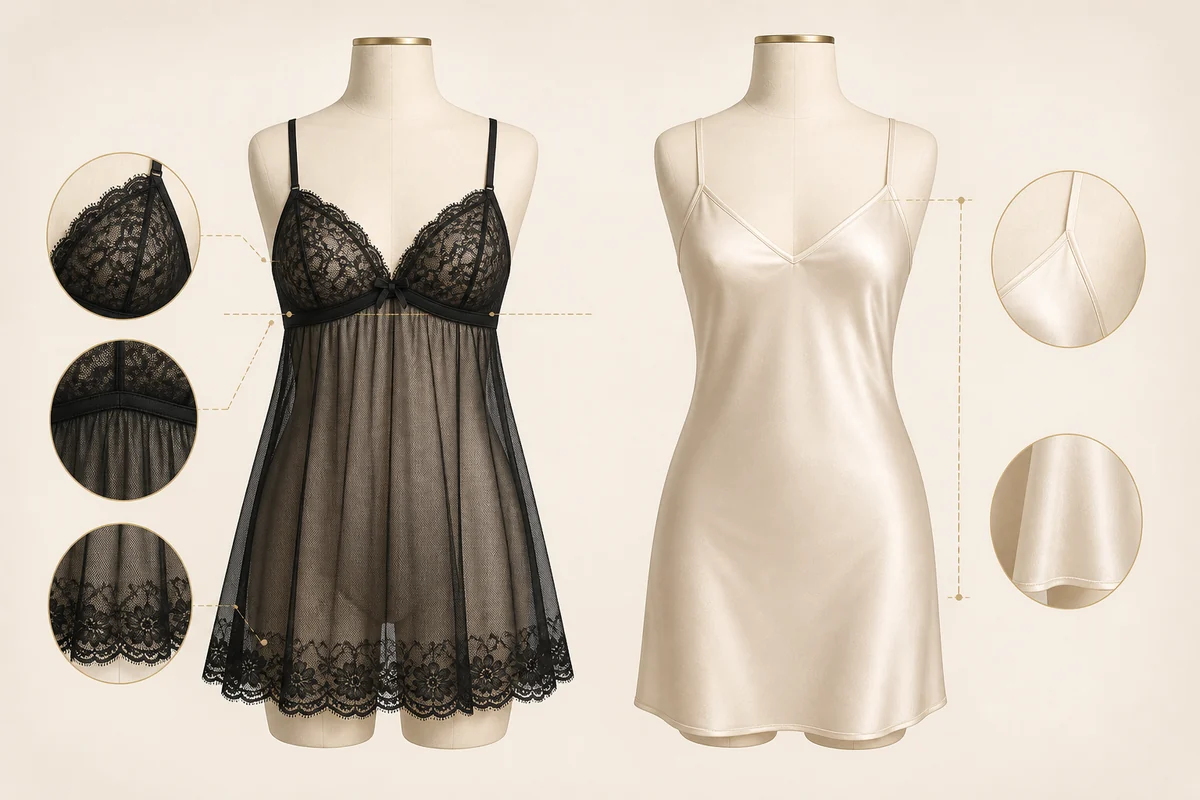
Babydoll vs Chemise at a Glance
Compare both styles under the same dimensions before assigning product names or approving a development sample:
| Feature | Babydoll | Chemise |
|---|---|---|
| Core silhouette | Defined bust with a loose or flared lower body | Straighter slip-style line that skims the body |
| Waist and hip fit | More ease below the bust or raised waist | More connected fit through the waist and hip |
| Typical length direction | Usually short, around the upper-to-mid-thigh range | Often upper thigh to knee, depending on the design |
| Bust construction | May use shaped cups, seams, lining, elastic, or wire | Often softer, although structured versions also exist |
| Common collection role | Visual hero, occasion-led style, or fashion statement | Refined slip, giftable item, or sleepwear crossover |
Retail guides generally agree on this silhouette distinction. A babydoll releases away below the bust1, while a chemise usually stays closer through the hips and thighs2. However, the approved measurements and construction specification should always take precedence over the marketing label.
Which is better for a lingerie collection, a babydoll or a chemise?
Choosing one style only because it looks more dramatic can leave a gap elsewhere in your assortment. A product should earn its place by performing a clear commercial role.
A babydoll is usually better when your collection needs a bust-led hero style with movement and visible flare. A chemise is usually better when the range needs a cleaner, more versatile slip silhouette. Use both only when each SKU has a distinct purpose.
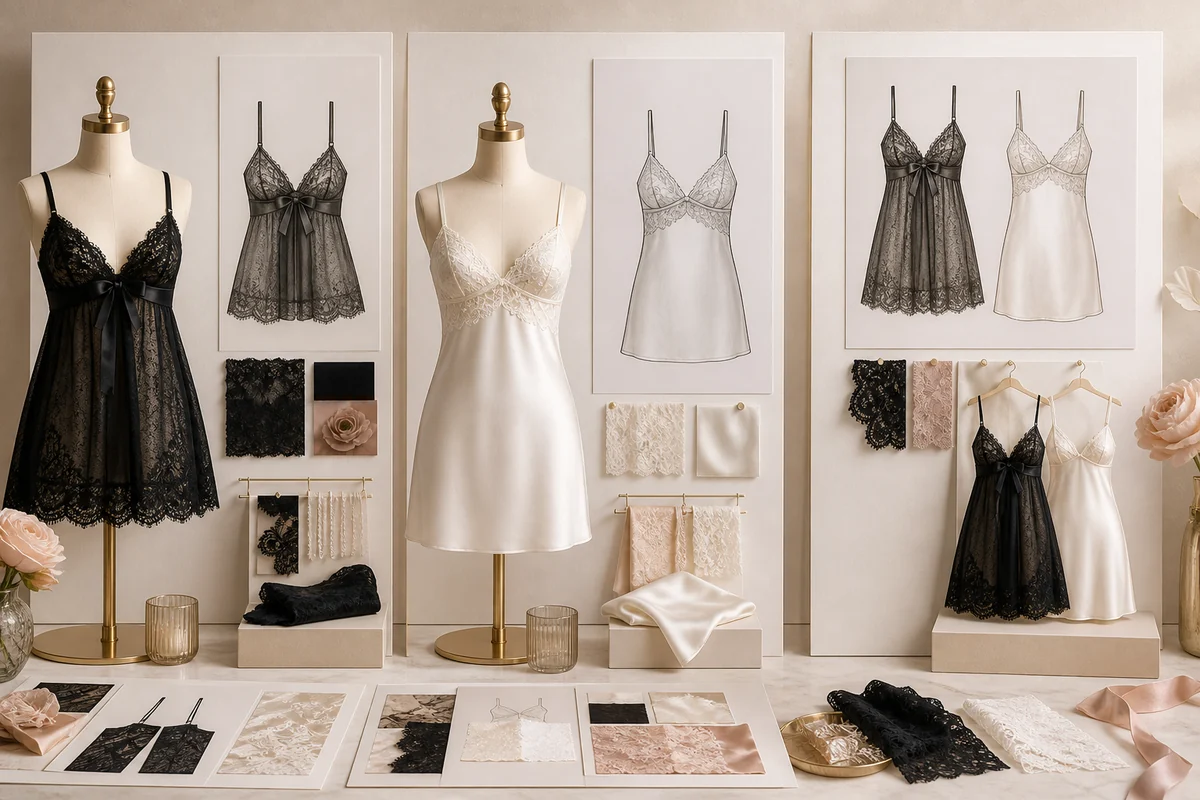
Choose by Collection Role
| Collection Priority | Better Starting Point | Why |
|---|---|---|
| A short product with visible flare and movement | Babydoll | The bust-to-skirt contrast communicates the design immediately |
| A clean and continuous slip line | Chemise | The straighter silhouette supports a more minimal product story |
| A lace- or mesh-led campaign hero | Babydoll, depending on the sketch | The separated upper and lower sections can create stronger visual contrast |
| An elevated sleepwear crossover | Chemise, depending on fabric and coverage | The slip shape can coordinate naturally with robes and nightwear |
| A compact range that needs two clearly different options | Both | Each style can serve a separate customer need without duplicating the other |
A useful test is whether your buying team can describe the role of each SKU in one sentence without repeating the same promise. If the babydoll and chemise share nearly identical fabric, length, neckline, styling, and campaign imagery, they may create duplication rather than meaningful choice.
Which style is easier to fit and grade?
A loose lower body can make the babydoll look easier to develop, while a simple chemise can appear technically straightforward. In practice, each style carries a different set of fit risks.
Neither style is automatically easier to fit. A babydoll concentrates risk around the bust, underbust transition, and skirt balance, while a chemise requires control of the complete line from neckline to hip and hem.
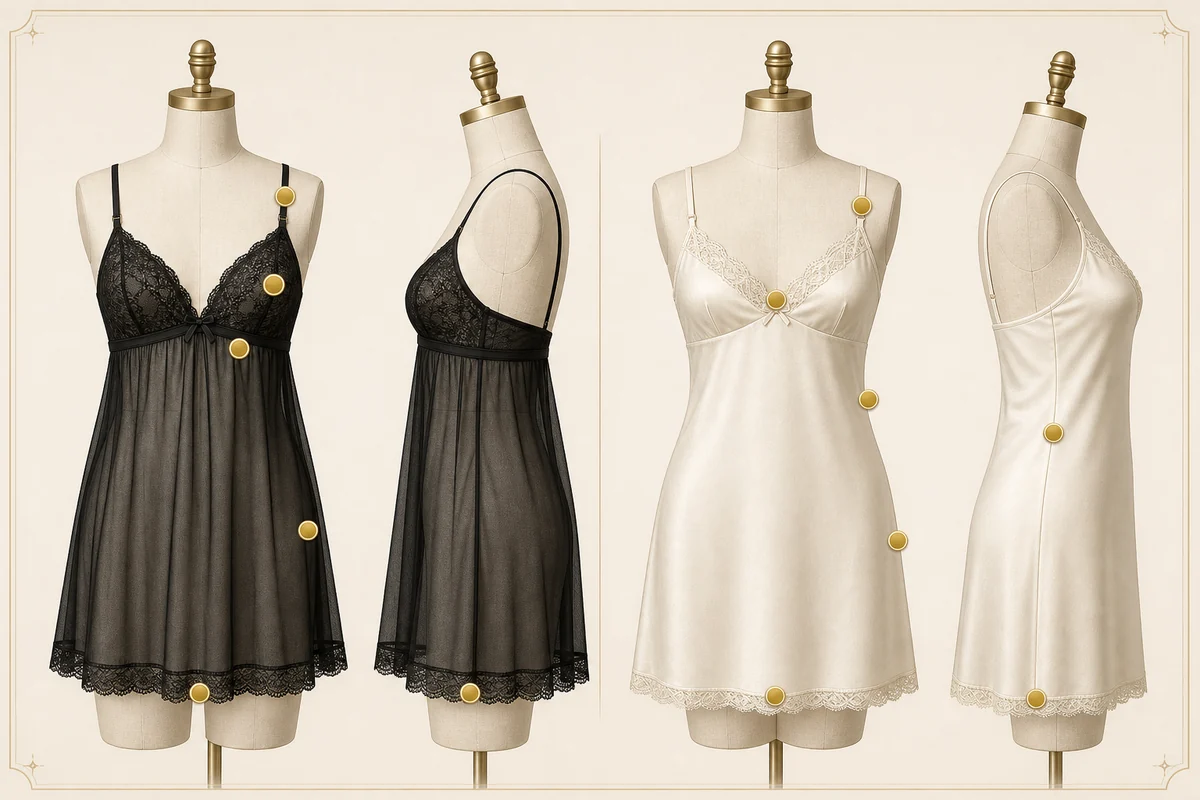
Fit Risks Buyers Should Review
| Review Point | Babydoll Focus | Chemise Focus |
|---|---|---|
| Bust | Cup shape, coverage, symmetry, and underbust position | Neckline stability, coverage, and side-seam placement |
| Body | Even release, gathers, flare, and front-to-back balance | Ease through the waist and hip without pulling or excess volume |
| Straps | Stabilize the bust without distorting the neckline | Keep the garment level and the neckline correctly positioned |
| Hem | Balanced skirt volume and consistent fall | Stable hemline during standing and movement |
| Size range | Preserve bust fit and the intended release below the bust | Preserve the intended relationship among bust, waist, hip, and length |
Approving one attractive sample does not approve the whole size range. Golden Metro's published development route includes size-chart development, grading after fitting approval, and full-size sample fitting.3 Buyers should define which sizes need physical review and which fit points are critical before bulk production.
Which fabrics work best for babydolls and chemises?
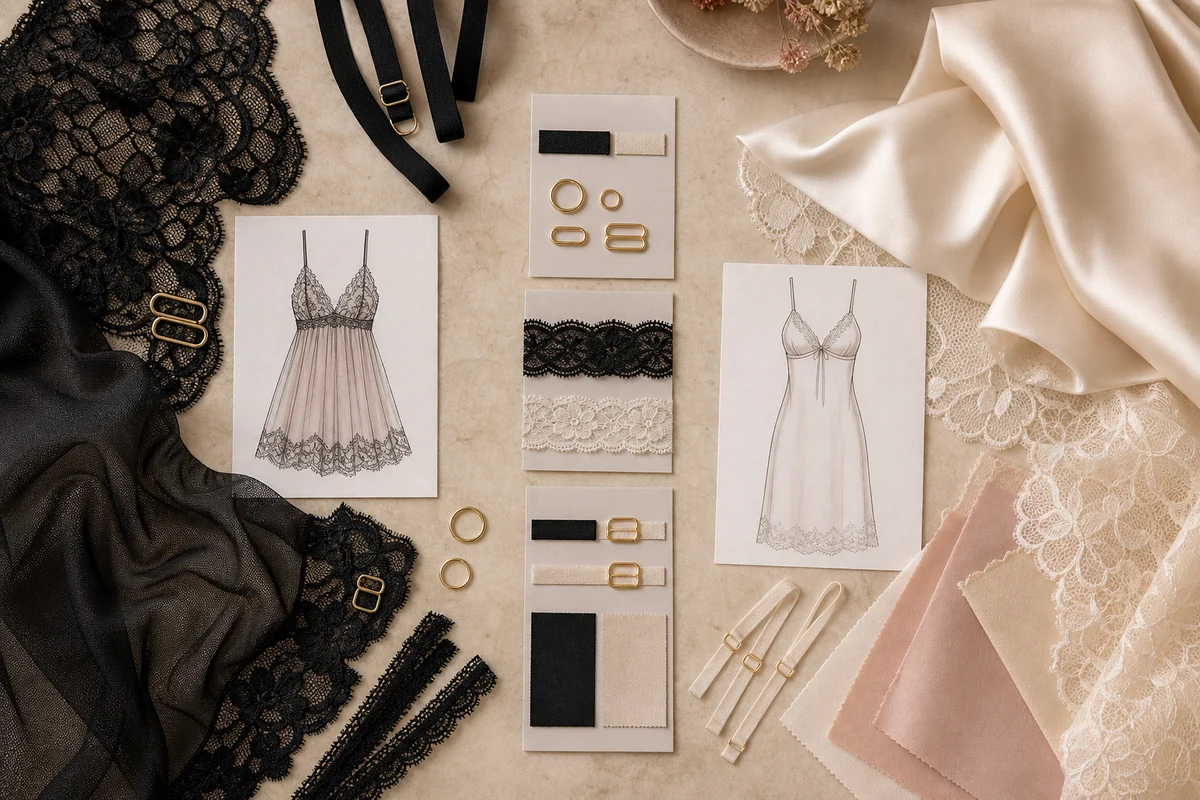
Fabric associations can be useful during design planning, but they can also become shortcuts. Lace does not automatically make a garment a babydoll, and satin does not automatically make it a chemise.
Babydolls often use lace, mesh, lightweight sheers, and decorative trims to support a floating silhouette. Chemises often use satin constructions, soft draping fabrics, stretch lace, or mesh to support a smoother line. The best fabric is the one that produces the intended shape, opacity, recovery, and hand feel.
Material Questions to Confirm Before Costing
| Material Question | Why It Matters |
|---|---|
| Does the fabric have the required drape or volume? | The same pattern can look completely different in a fluid fabric and a firmer fabric |
| What level of stretch and recovery is required? | Stretch affects fit, grading, neckline stability, and movement |
| What is the target opacity? | Sheerness changes product positioning, lining decisions, and photography |
| Must lace motifs be mirrored or placed? | Motif placement affects appearance, material use, and production consistency |
| Can all components be matched in color? | Lace, mesh, elastic, straps, lining, and trims may come from different suppliers |
| What is the verified fiber composition? | Surface terms such as satin do not identify the underlying fiber content |
Do not use "satin" as a substitute for verified fiber composition. For example, the US FTC requires covered textile labels to disclose generic fiber names and percentages by weight4. Labeling requirements should always be checked for the destination market rather than assumed to be globally identical.
How should buyers merchandise babydolls and chemises?
Even a well-developed garment can confuse customers if the product title, imagery, included pieces, and online filters do not use the same definition.
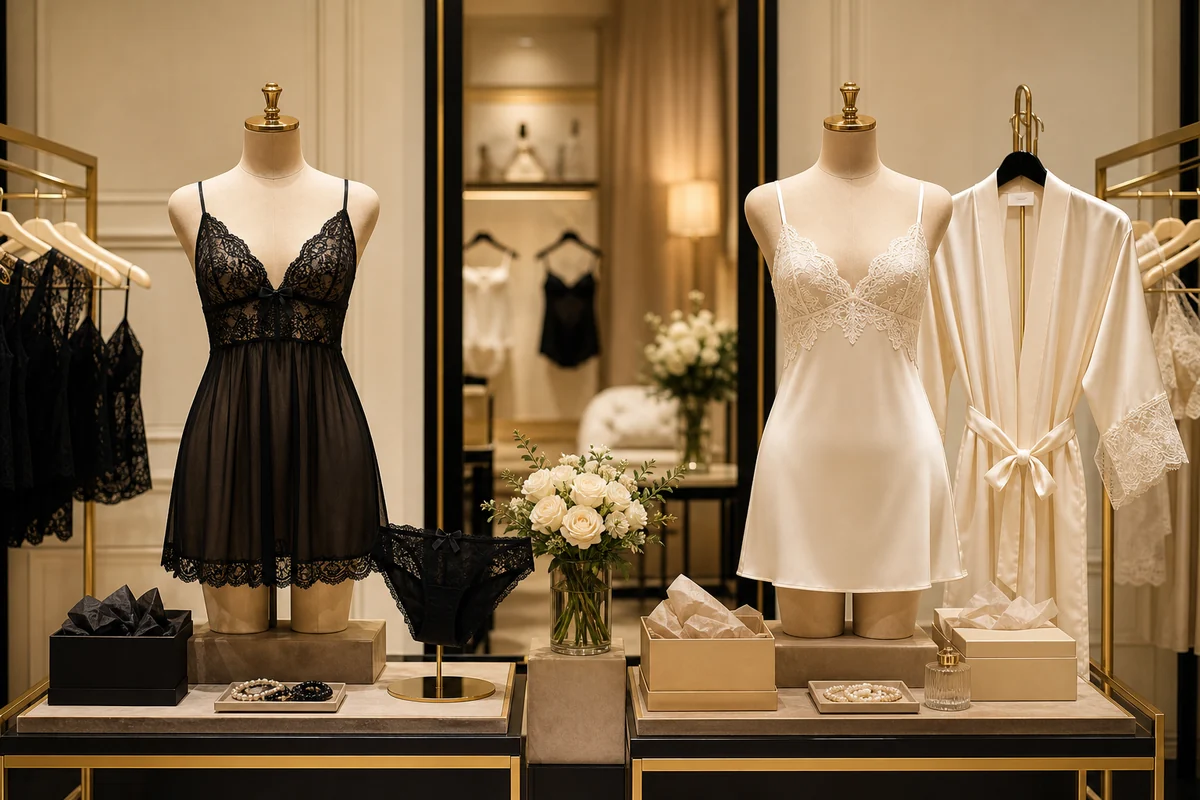
Merchandise a babydoll around its bust-to-flare silhouette and clearly state whether a matching bottom is included. Merchandise a chemise around its slip line, fit, length, and relationship to robes or sleepwear. Keep the product roles separate across photography, naming, and navigation.
Five Merchandising Details to Standardize
- Product name: Use the same category term in line sheets, packaging, product data, and online listings.
- Included components: State whether the SKU contains a brief, thong, robe, or accessory.
- Fit description: Explain whether the lower body flares, drapes, or follows the hip.
- Image sequence: Use front, side, back, and detail images that show the defining silhouette and opacity.
- Taxonomy: Keep categories, filters, URLs, and internal links consistent so customers do not see the same style under conflicting names.
A shared color or trim story can make both styles feel like one collection. Their silhouettes and selling messages should still make the choice easy to understand.
Can babydolls and chemises be developed in the same collection?
Using both styles can widen the assortment, but simply changing the product name is not enough. Two garments with the same visual role will compete for attention and inventory.
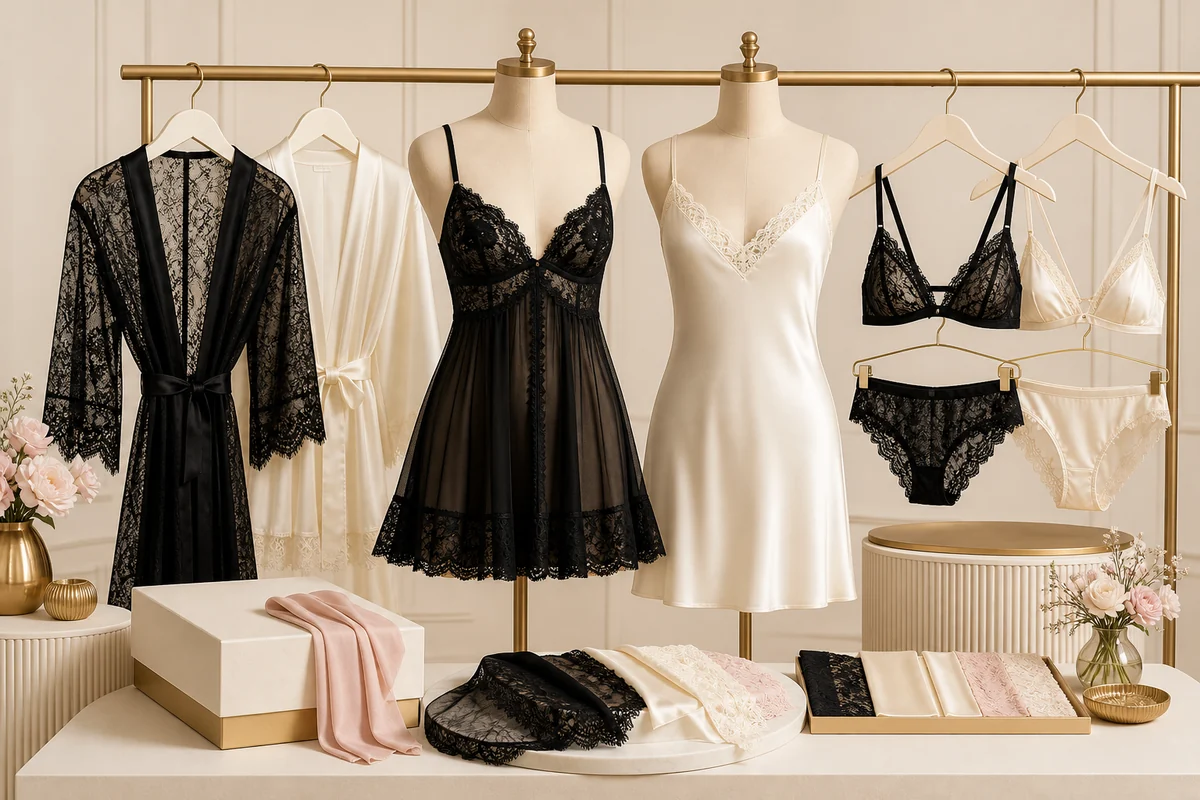
Yes, babydolls and chemises can work in the same collection when they have different silhouettes, product promises, and selling roles. A strong combination might use a lace-and-mesh babydoll as the visual hero and a cleaner chemise as the refined or sleepwear-adjacent option.
How to Avoid Duplicate SKUs
- Separate the silhouettes: Make the babydoll flare and the chemise drape visibly different.
- Assign different collection roles: Decide which product is the campaign hero, refined essential, gifting item, or sleepwear crossover.
- Define the sellable unit: Pair the babydoll with a matching bottom if appropriate, while positioning the chemise alone or with a robe.
- Vary the material balance: A shared lace can connect the range, but the amount, placement, opacity, and supporting fabric should reinforce each silhouette.
- Review the full range before sampling: Compare sketches, lengths, necklines, colors, and price positions side by side.
If both products still need the same description after these decisions, the range may benefit from developing the stronger idea first and using sales and fit feedback before adding the second.
What should you send a manufacturer before sampling?
A reference image can communicate direction, but it does not define the construction, material performance, size range, or packaging requirements needed for repeatable production.
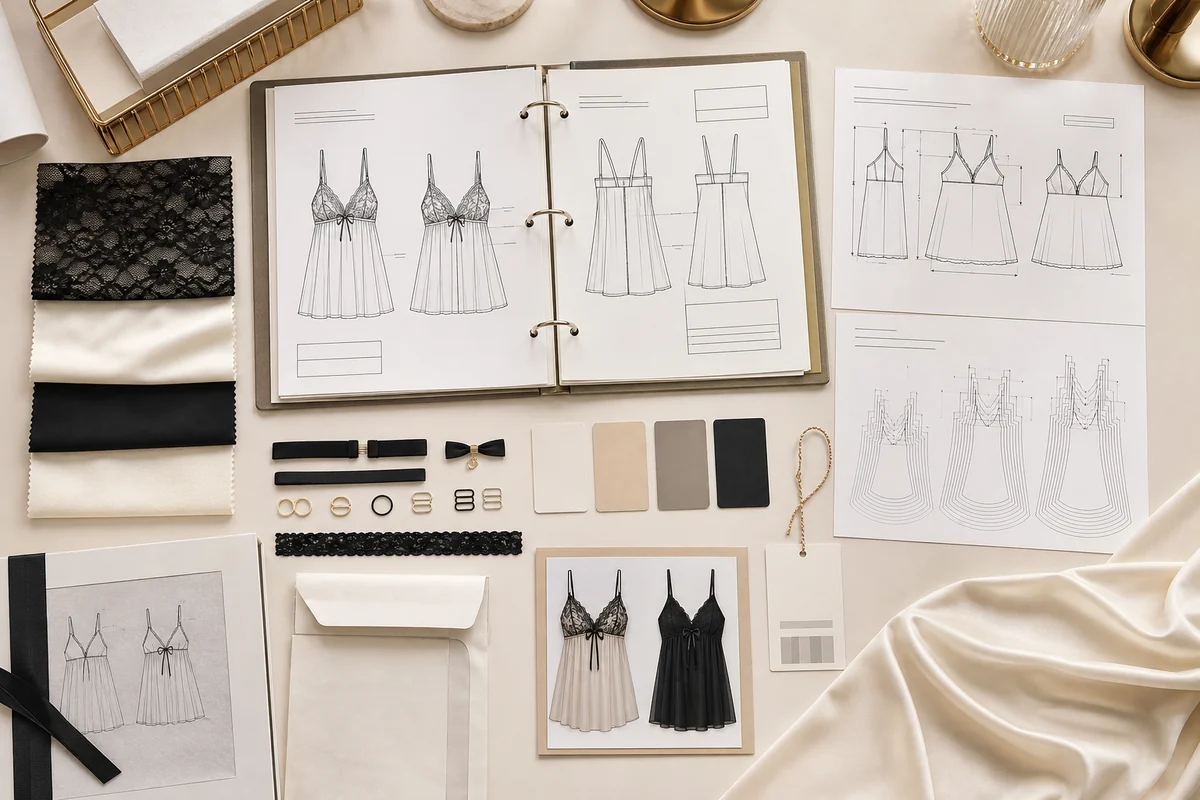
Send the manufacturer a clear collection role, technical reference, silhouette description, fit expectations, size range, material direction, included components, color requirements, branding, packaging, and approval route before sampling begins.
Development Brief Checklist
- Target buyer and channel: Define whether the product is for wholesale, specialty retail, e-commerce, gifting, or sleepwear.
- Collection role: State whether it is a hero style, coordinated set, refined essential, or capsule extension.
- Reference material: Supply a tech pack, sketch, physical sample, or image for direction.
- Silhouette and fit: Confirm the front, side, and back shape, finished length, support level, intended ease, size range, and fit base.
- Fabric and trims: Describe stretch, hand feel, opacity, lining, lace placement, straps, elastic, hardware, and decorative details.
- Sellable unit: Confirm whether the product is sold alone or with a matching bottom, robe, or accessory.
- Color and branding: Provide color references, labels, hangtags, barcodes, and retail packaging requirements.
- Approval route: Agree on fitting samples, color approval, size review, pre-production confirmation, and product-specific quality checkpoints.
Golden Metro accepts tech packs, reference samples, design concepts, and target product directions for review. Its published custom sexy lingerie development route3 includes construction review, material and trim matching, color approval, size and fit development, branding, packaging, and lingerie-specific inspection points.
Conclusion
A babydoll is the stronger choice when the product idea depends on a defined bust and a loose, flared lower body. A chemise is the stronger choice when the product idea depends on a continuous, body-skimming slip line.
For a successful B2B collection, do not choose by the style name alone. Define the commercial role, fit architecture, material behavior, included components, and merchandising plan before sampling. If both styles have clearly different jobs, they can work together without creating duplicate SKUs.
Golden Metro develops custom and private-label lingerie from product concepts, technical packs, and reference samples. To review a babydoll, chemise, or coordinated collection, share your target market, channel, size direction, product reference, and intended sellable unit through the Golden Metro lingerie development page.
-
Supports the core distinction between the flared babydoll silhouette and the straighter chemise silhouette. ↩
-
Provides additional context on typical length, fit, bust construction, and fabric differences between the two categories. ↩
-
Documents Golden Metro's published development, fitting, material, branding, packaging, and quality-control route. ↩ ↩
-
Explains US requirements for generic fiber-name and percentage disclosures on covered textile products; destination-market rules should be checked separately. ↩